Focused magnetic pulses to support mood and brain function.
TMS uses a magnetic coil placed against your scalp to stimulate specific areas of the brain. You stay awake and seated, and your care team guides every session.
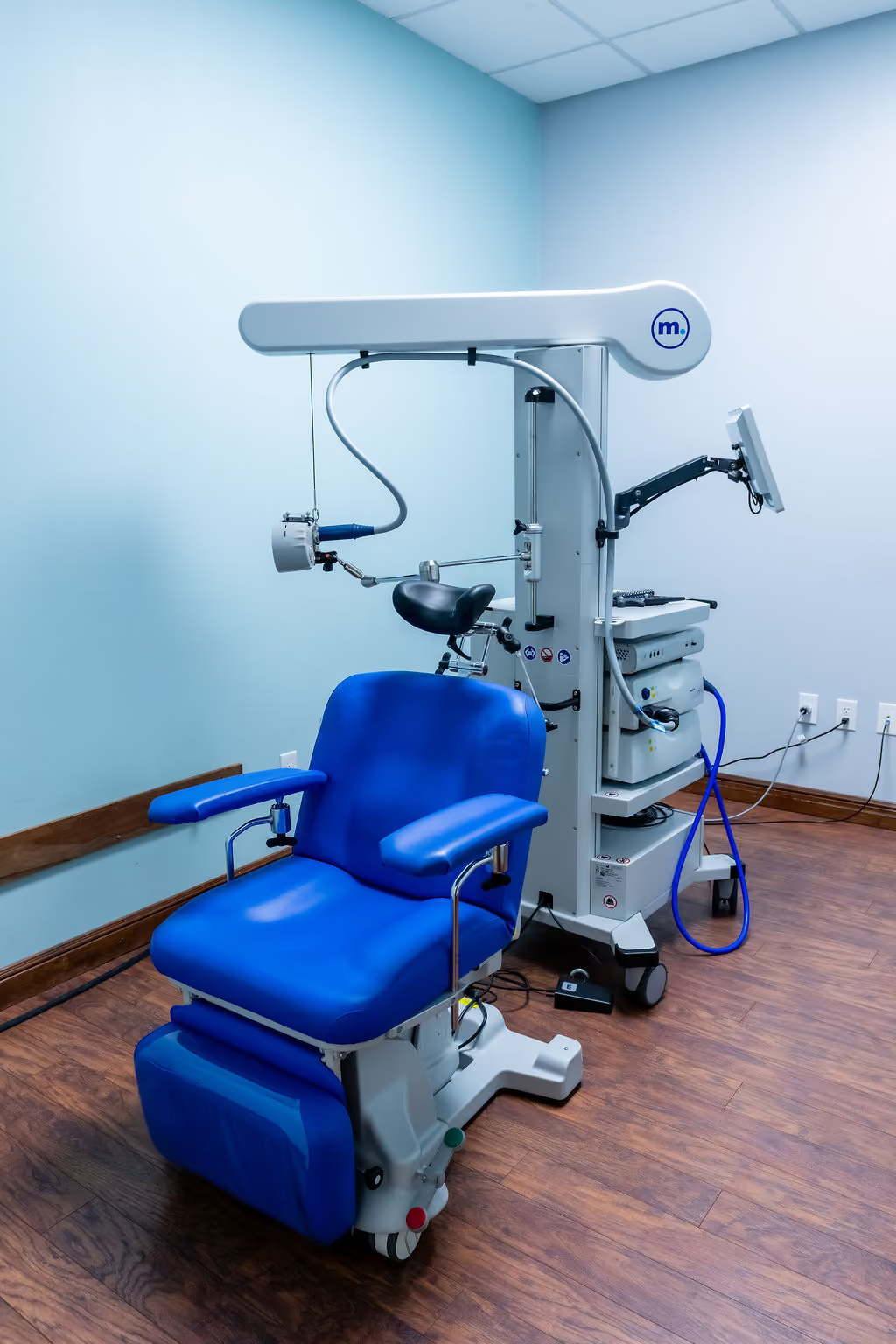
What your session looks like.
Your schedule depends on your condition, medical history, and assessment. Your physician will explain the recommended course, how often you will come in, and why.
- Session length
- About 20 minutes
- What it feels like
- A light, rhythmic tapping on your scalp
- Afterward
- Drive home or return to work
- During treatment
- You stay awake and can talk with us
Why rTMS may be part of your care.
rTMS is not a stand-alone answer for every condition. When clinically appropriate, it can help change activity in the brain circuits linked to your symptoms.
Reach specific circuits
Focused magnetic pulses stimulate a precise area of the brain, such as a region involved in regulating mood.
Build lasting change
Repeated sessions may strengthen communication between brain regions, which is why completing the full course matters.
Strengthen a larger plan
When appropriate, rTMS works alongside medication, therapy, and other treatments selected for your condition and goals.
You will know what is happening at every step.
The equipment may look unfamiliar, but each session is simple, routine, and closely supervised.
We map your treatment
At your first session, we find the right strength for you and locate the exact area to treat.
You settle into the chair
You sit in a reclined chair, with earplugs if you’d like. The coil rests gently against your head, and we stay beside you.
The pulses begin
You will hear clicking and feel light tapping on your scalp. We can adjust the coil or pause if anything feels uncomfortable.
You go about your day
There is no recovery time. After a brief check-in, you can drive yourself home or to work.
A little preparation helps your session go smoothly.
Before you arrive
- Take your medications as usual unless your care team advises otherwise
- Leave earrings, hair clips, and other metal accessories at home
- Tell us about any metal or implanted devices in or near your head
- Tell us about any history of seizures or recent changes to your medications
Your comfort and safety
- A trained team member runs every session
- Earplugs protect your hearing from the clicking sound
- We can adjust the coil position or strength if you feel discomfort
- We track your symptoms regularly to see how you are responding
Common rTMS questions.
Does rTMS hurt?
Most people feel a tapping sensation on the scalp while the pulses are delivered. Some notice mild scalp discomfort or a headache during the first week, which usually eases as treatment continues. Tell us if anything feels uncomfortable so we can adjust the settings.
How many sessions will I need?
A typical course involves sessions on most weekdays for several weeks. The exact number depends on the condition being treated, the protocol your clinician recommends, and how you respond. We explain the proposed schedule before treatment begins.
Can I keep taking my medications?
Most people continue their current medications during rTMS. Some medications can affect treatment, so please share a complete list before your first session. Do not stop or change any medication without talking to your prescriber.
Will insurance cover rTMS?
Many plans cover rTMS for depression that has not improved with medication, and some cover it for OCD. Prior authorization is usually required, and our team handles it.