When depression hasn’t lifted, you still have options.
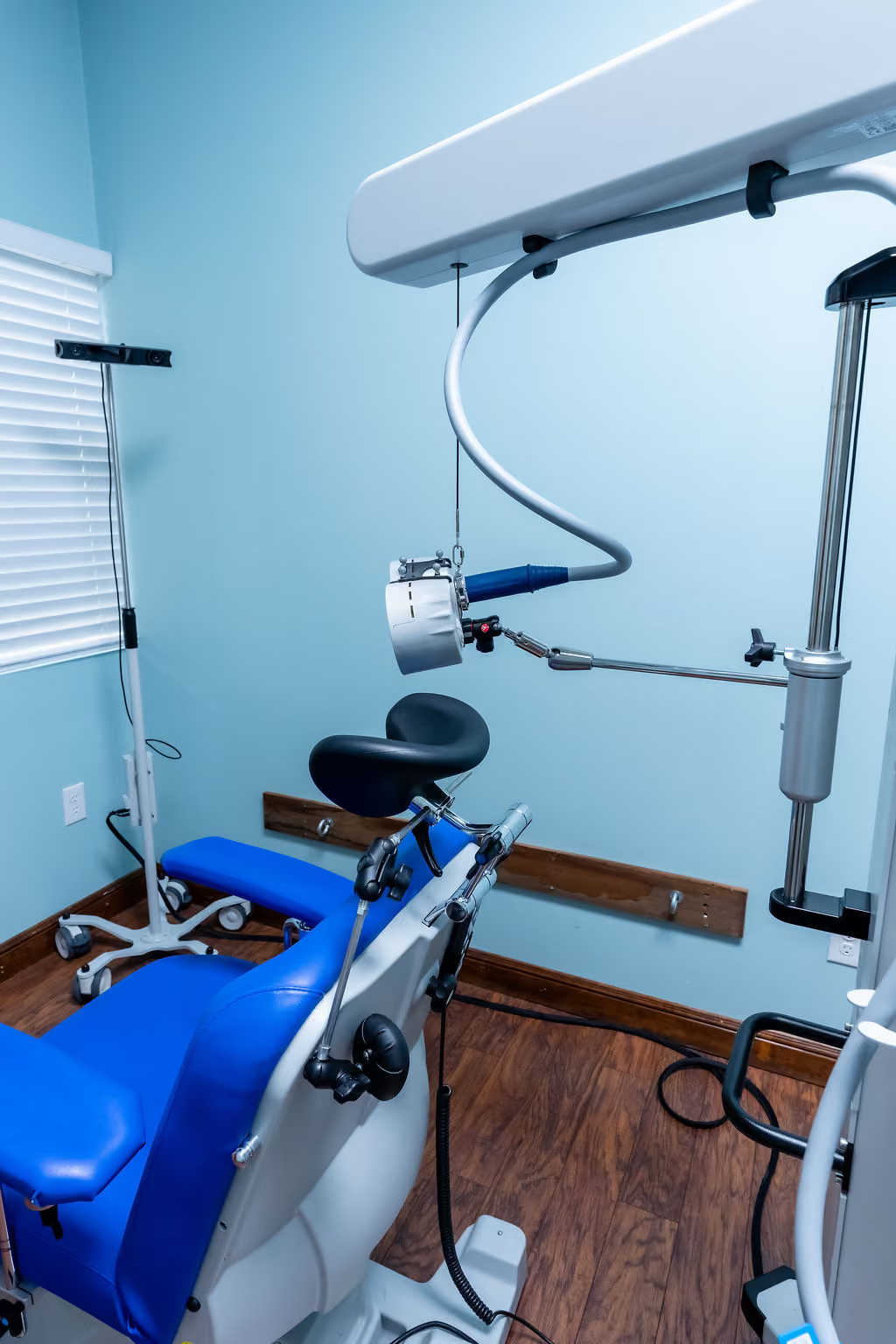
Trying medication after medication without enough relief is exhausting. We review your treatment history with you and discuss whether other approaches, including transcranial magnetic stimulation (rTMS), may be right for you.
Depression can affect every part of life.
When depression doesn’t lift, it can touch everything: your energy, sleep, work, and relationships. You may have tried several medications, therapy, and changes to your routine and still not feel like yourself. Whether you have been struggling for months or years, care should start with where you are now.
Mood and motivation
Persistent low mood, loss of interest, or feeling flat can make it hard to enjoy things you used to love.
Energy and sleep
Sleeping too much or too little and feeling drained can make everyday tasks take a lot of effort.
Thinking and focus
Trouble concentrating, making decisions, or remembering things can affect work, school, and home life.
Medication side effects
Side effects from trying medication after medication can add their own weight to how you feel each day.
Depression that hasn’t responded to medication is common, and it isn’t your fault.
Many people don’t get enough relief from antidepressants, even after trying several. That doesn’t mean nothing else can help. We review what you’ve tried and explain your other options, and we’ll be honest with you about what we think is possible.
A plan built around you.
Depression is shaped by many factors, from past treatments and medications to sleep, health, and daily stress. We review your full history and coordinate with your psychiatrist or prescriber, so your plan builds on your current care and fits the way you live.
Review your history
We go through the medications, therapy, and other treatments you’ve tried, and how each one worked for you.
Discuss your options
We explain which approaches may fit, such as rTMS, what they involve, and what the evidence shows.
Track how you respond
We measure your mood at regular points and adjust the plan with you and your prescriber as needed.
Therapies we may combine in your plan.
Depression affects each person differently, so we match treatment to your history. Depending on your assessment, your plan may include one or both of these.

An honest look at fit and expectations.
You may be a good fit if
- You have been diagnosed with depression
- You have tried two or more antidepressants without enough relief
- Side effects have made medication hard to continue
- You can attend regular sessions over several weeks
- You have no metal implants in your head and no history of seizures
- You are looking for next steps for someone you care for
What to realistically expect
- Improvement usually builds gradually over several weeks
- Not everyone responds, and we will tell you plainly
- Keep taking your medication unless your prescriber says otherwise
- We measure your mood regularly so you can see what is changing
- Most people return to normal activities right after sessions
- We work alongside your psychiatrist or prescribing doctor
Common questions about depression care.
What is rTMS, and what does it feel like?
rTMS uses magnetic pulses to stimulate an area of the brain involved in mood. You stay awake and seated during each session, and most people feel a tapping on the scalp. You can usually drive and return to your day afterward.
Do I need to stop my antidepressant?
Usually not. Many people continue their current medication during treatment. Any change to your medication is a decision for you and your prescriber, and we coordinate with them throughout.
Is rTMS covered by insurance?
Many plans cover rTMS for depression that hasn’t improved with medication, usually with prior authorization. We check your benefits and handle the authorization process, and we review any costs with you before treatment begins.
Will you work with my psychiatrist or therapist?
Yes. With your permission, we share findings and progress updates with your psychiatrist, primary care physician, and therapist. The goal is care that builds on what you have already done, not care that starts over.
Can a family member come to appointments?
Yes. Family members and friends can offer support and help us understand how you have been doing. You are welcome to bring anyone who helps you day to day.
What if I’m in crisis?
NeuroBridge is not an emergency service. If you are thinking about suicide or are in crisis, call or text 988 to reach the Suicide & Crisis Lifeline, or call 911. Help is available 24 hours a day.