Measured, hands-on rehab with a team in your corner.
Movement science pairs detailed gait and balance testing with therapy built around how you move. Your care team sets goals with you and measures every step of progress.
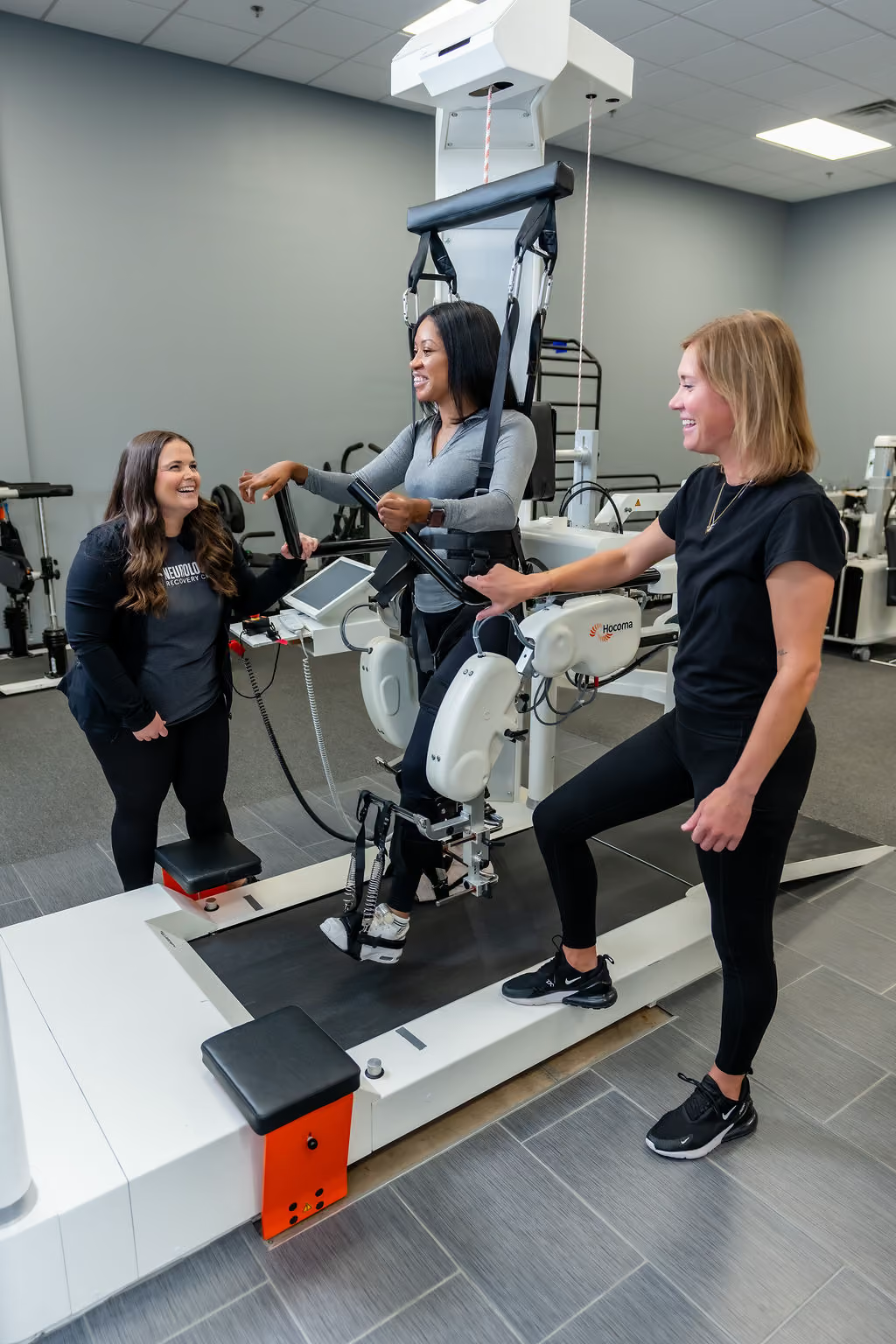
What your session looks like.
Your plan depends on your condition, medical history, and assessment. Your care team will explain what to work on, how often you will come in, and why.
- Session length
- 45–60 minutes
- What it feels like
- Active, challenging work at your level
- Afterward
- Some muscle tiredness is normal
- During treatment
- At least two specialists work with you
Why movement science may be part of your care.
Movement therapy is not a stand-alone answer for every condition. When clinically appropriate, it helps your brain and body relearn skills through repetition.
Measure what matters
Gait, balance, and grip testing show exactly where you stand, so therapy targets your real limitations.
Rebuild through repetition
Focused, repeated practice may help your nervous system form new connections and strengthen everyday skills.
Strengthen a larger plan
When appropriate, movement work is timed alongside hyperbaric oxygen and other therapies selected for your goals.
You will know what is happening at every step.
The advanced robotics may look technical, but every session is adapted to your ability and pace.
We measure your baseline
At your first session, we test your gait, balance, and strength to set your baseline.
We set your goals
Together, we choose goals that matter in your daily life, such as walking farther or standing up safely.
You practice with your care team
Each session pairs you with at least two specialists for targeted exercises and guided practice. We adjust the difficulty as you improve.
We remeasure your progress
We repeat your baseline tests at set points, so you and your physicians can see what has changed.
A little preparation helps your session go smoothly.
Before you arrive
- Wear comfortable clothing that lets you move freely
- Bring supportive shoes and any brace or walking aid
- Take your medications as usual, and eat a light meal beforehand
- Tell us about any recent falls, new pain, or changes in your condition
Your comfort and safety
- A trained specialist guides every session
- Exercises match your ability and energy that day
- We use support equipment to reduce your risk of falling
- We retest regularly so you can see how you are progressing
Common movement science questions.
How is this different from physical therapy?
Movement science uses many of the same tools as physical therapy, but it starts with detailed measurement of how you walk, balance, and grip. We use those numbers to guide each session and retest regularly, so progress is tracked rather than guessed.
I already finished rehab. Can I still improve?
Many people continue to make progress after formal rehab ends, even months or years later, though results vary. We measure where you are now, set realistic goals, and tell you honestly what we see as therapy continues.
How many sessions will I need?
There is no single schedule for everyone. Many plans include two sessions a week for several months. The exact number depends on your condition, your goals, and how you respond, and we explain the proposed schedule first.
Can I do this if I use a walker or wheelchair?
Yes. Sessions are adapted to your current ability, whether you use a cane, walker, or wheelchair. We use support equipment to keep you safe and build from where you are today. Please bring any mobility aids to your first session.